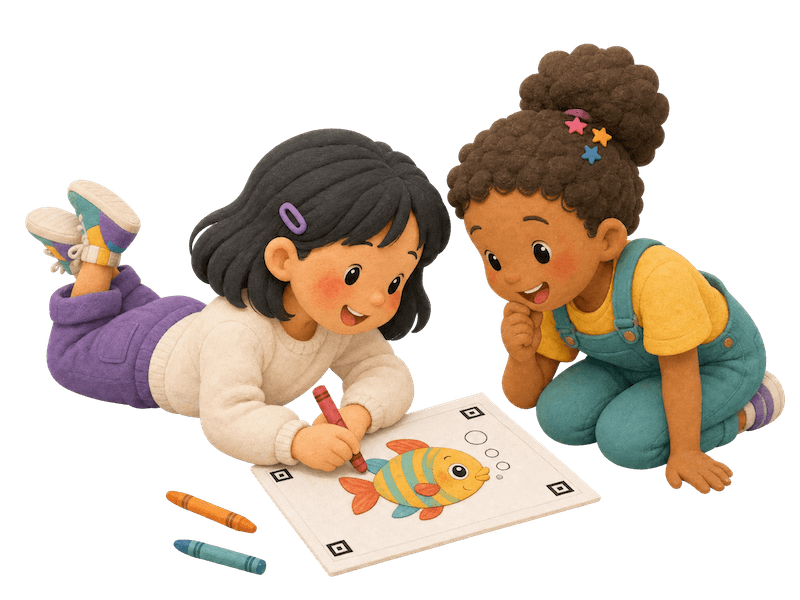
Play Magic Reef is a coloring activity for kids that turns their artwork into swimming sea creatures in a virtual aquarium. You can color on paper and scan it with a phone, or color directly on a phone or tablet. The aquarium can stay on a laptop beside the table, or on a TV connected to that laptop.
If you are looking for something to do indoors with siblings, the useful part is that every child contributes to the same scene. There is no score to beat. You end up with a reef they made together.
Choose a setup before you start
Paper and crayons: print the free coloring sheets, put out crayons or markers, and keep a camera phone nearby. Children can all color at once while an adult helps scan the finished pages. They do not each need a device.
No printer: open the tank, choose Add a fish, and color directly on a phone, tablet or computer. A family can take turns on one device. With multiple devices, scan the tank's QR code on each so everyone's fish joins the same reef.
A bigger shared screen: show the tank on a laptop, or connect that computer to a TV with a suitable cable. Screen mirroring is another option if your devices support it. The setup page shows the different ways to play. Internet access is needed; this is not an offline activity.
A flexible half-hour plan
This is a suggested rhythm, not a timer the children have to follow.
- Pick the inhabitants. Let each child choose a creature: perhaps a clownfish, turtle, jellyfish or whale. Agree on a loose idea, such as a rainbow reef, or let everyone choose their own colors.
- Color together. Spend as much or as little time as they want. Younger children can fill a large shape; older children can add patterns or invent a story about their creature.
- Send one fish first. On paper, keep the entire sheet and its four corner markers visible to the camera. Use even lighting and flatten curled edges. Check the scan before sending. With digital coloring, use the send button.
- Find it in the aquarium. Ask its creator to point it out. Then add the next one and see how the colors look together.
- Decide what happens next. Make a companion, give the creatures a story, or stop there and put the paper originals on the fridge.
For a small free trial, start with one fish per child. The guest tank allows five fish in total, rather than five per child. Guest play lasts an hour and is temporary. If they want more room or a longer session, check the current passes and limits before promising a whole afternoon of additions.
When children are different ages
A younger child may want an adult to handle the camera and send button. An older sibling can help choose the next creature or become the person who scans each page. Keep that job optional: the younger child's scribbles belong in the reef just as much as a carefully patterned fish.
If sharing a tablet becomes a queue, move the coloring onto paper. One adult's phone can handle the scans while everyone else keeps coloring. If you have no printer, take turns adding one fish each before starting a second round.
Is this screen-free?
No. The aquarium is on a screen, and scanning or digital coloring uses a device. The paper version lets children spend the coloring part away from a screen, then gather to see the result. It is a good fit when you want a shared creative activity with a screen as part of it, rather than an entirely screen-free game.
No app installation is required. The free guest trial does not need an account, and children never need their own accounts. An adult signs in if they want to buy a pass or manage an owned tank.
Start with one fish, or read the paper and tablet walkthrough if you want to see the steps first. Planning for a larger group? Use the birthday party setup guide.